Pinot Noir is among the world’s most demanding varieties. It needs cool summers, sufficient heat accumulation and manageable spring frost risk. For decades Chilean plantings clustered in colder pockets of the Central Valley—but the climate is shifting, and with it wine geography.
Rising temperatures nudge optimum thermal regimes southward. That reframes what once sounded marginal: can the valleys of Itata, Biobío and Malleco become reference terroirs for Pinot Noir?
Study the climate, not just the map
At AiQlim we tackle the question differently: rather than grading sites on intuition alone, we compare Chile’s realised climate against the world’s most recognised Pinot-producing regions.
Following Nesbitt et al. (2022), we tag “analogue” years using mean seasonal temperature and growing-degree-days. Benchmarks span three Pinot classics: Champagne, Burgundy and Baden.
The takeaway is blunt: Chile’s southern valleys have already experienced—at documented frequencies—seasons climatically interchangeable with those European benchmarks.
What the maps show
Analogue frequency maps crystallise consistent patterns across 1981–2020:
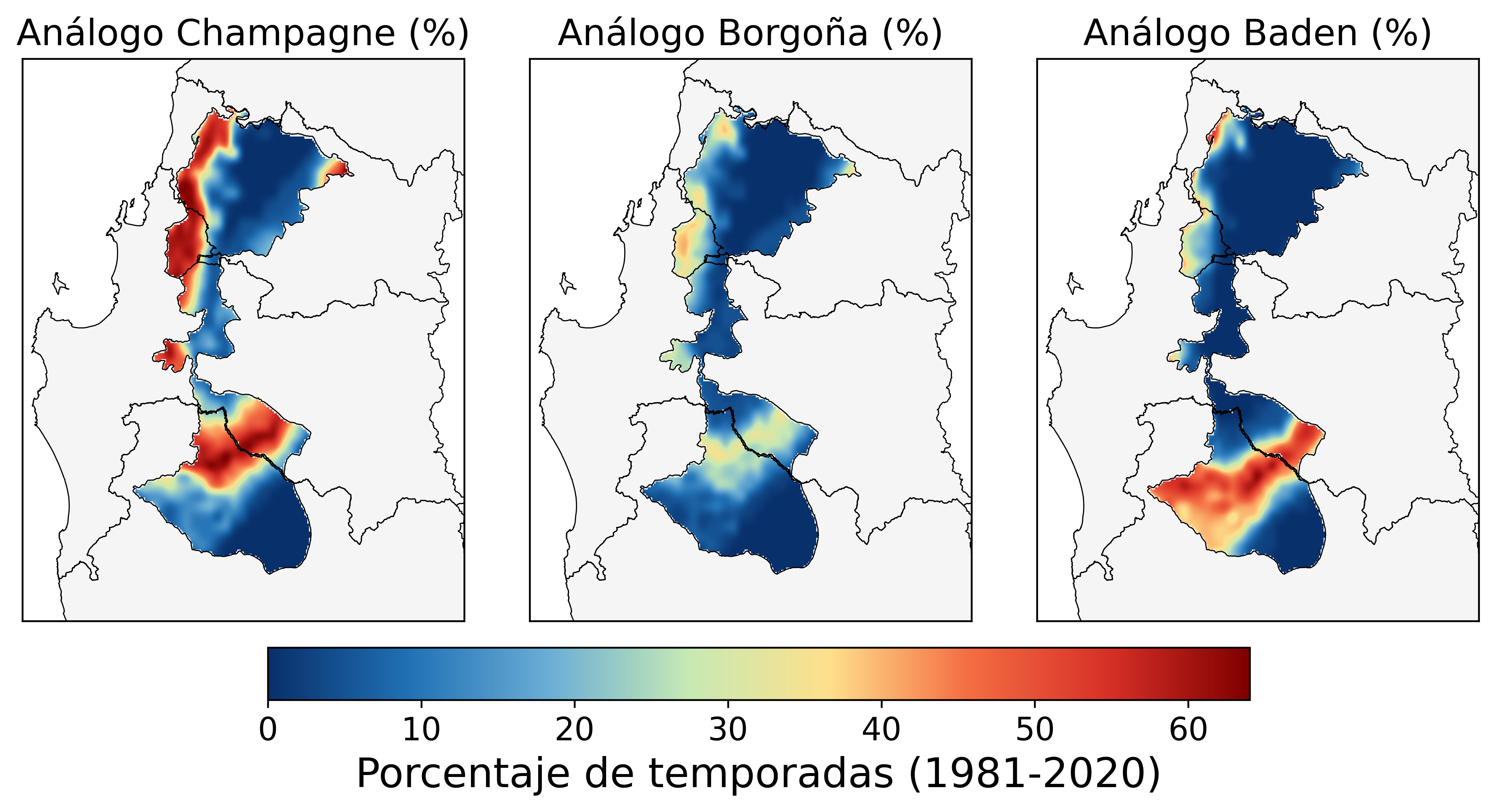
- Champagne acts as an analogue across all three valleys with moderate percentages and broad spatial coverage—it is the most frequent analogue type locally.
- Burgundy appears less often, clustered in narrower valley-sector pockets.
- Baden records the strongest matches in northern Malleco, where roughly 60–65 % of vintages behaved like Baden—a German Pinot stronghold revered for expressive styles.
This is not forward-looking extrapolation—it is 40 years of climatic history already in the archive.
An index for deciding where to plant
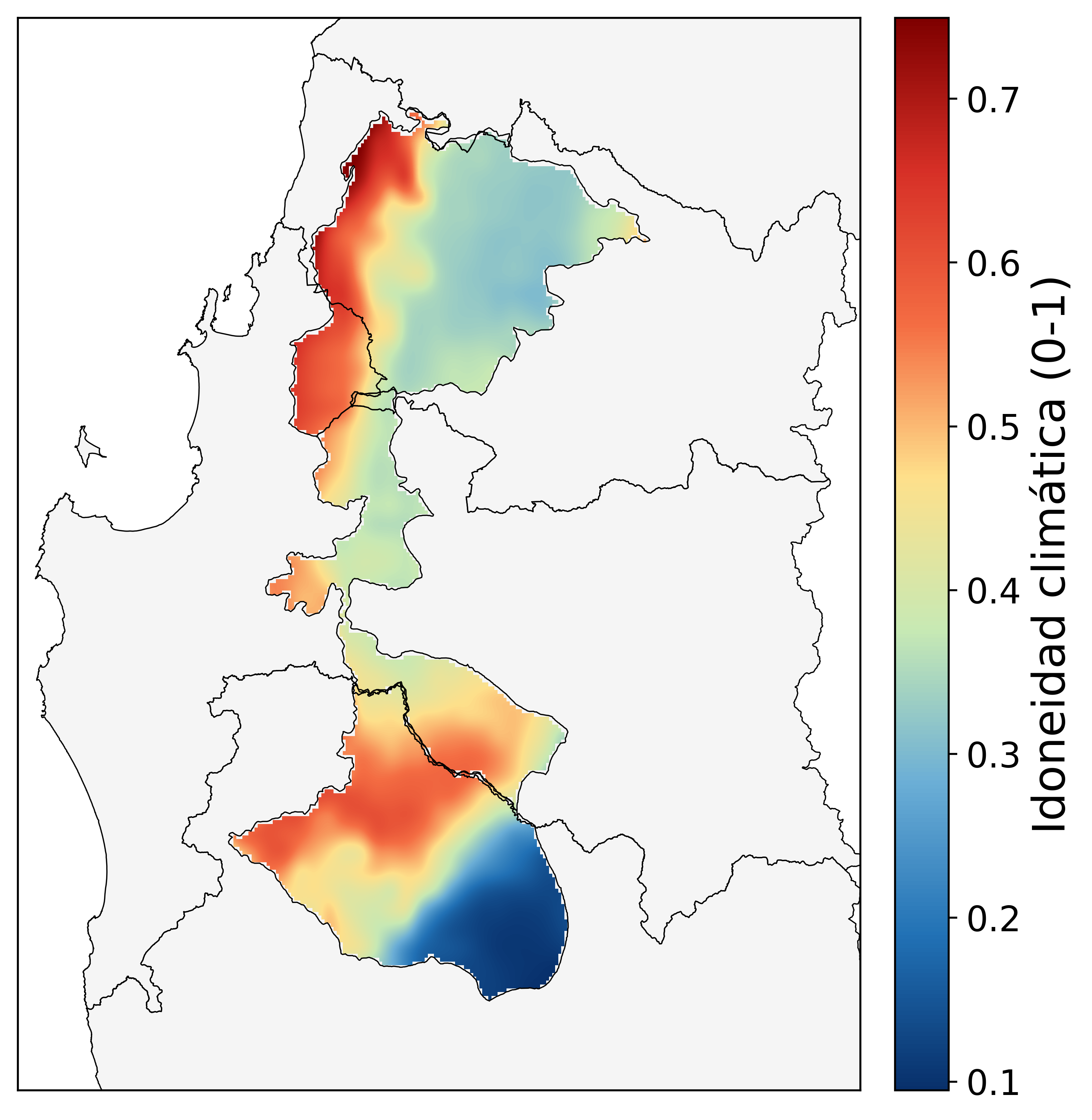
Beyond analogues we built a climate suitability index (0–1 scale) assembling four Pinot-critical variables: mean growing-season temperature, growing-degree-days, rainfall around harvest and spring frost incidence.
The index pinpoints exactly where temperate nights, ripening-capable warmth and tempered extremes coexist.
Peak values congregate along coastal and pre-Andean strips of northern Malleco plus southern Biobío — zones with maritime buffering, chilly nights and summers that evoke Europe more than the Central Valley furnace.
A tangible opportunity
Southern Chile is not speculative ground. It already hosts the climatic envelope Pinot Noir demands, evidenced across four observational decades. Missing pieces are granular decision lenses: precisely where, facing which aspect, at what elevation.
That synthesis is AiQlim’s core offer—compressing unruly meteorological stacks into actionable intelligence for growers, investors and advisors navigating an evolving vineyard landscape.
Data: CR2MET. Method anchored in Nesbitt et al. (2022), doi.org/10.20870/oeno-one.2022.56.3.5398. Analogues match mean seasonal temperature plus growing-degree-days against reference-region archives. The suitability index composites mean temperature, GDD, harvest rainfall and spring frost incidence on a 0–1 unity scale.